Newsletter No. 1

May 2023 – October 2025

This Newsletter provides a summary of the activities carried out between May 2023 and October 2025. Its purpose is to inform those who support Ecomemoria, as well as other interested individuals or organizations, about the progress, achievements, and challenges faced in relation to the establishment, development, and maintenance of the Ecomemoria Forest, located in Curacautín, Araucanía Region, Chile.

This newsletter aims to make the project’s progress transparent and strengthen ties with those who make its development possible. Starting in 2026, this newsletter will be published semiannually, complementing the information available on the official website (ecomemoria.cl) and Ecomemoria’s social networks (Facebook and Instagram), with the purpose of maintaining fluid and permanent communication with the community, volunteers, and the international support network.

2023 – Foundation and First Plantation

During 2023, the material and symbolic foundations of the Ecomemoria project were laid. Initial infrastructure: The perimeter fence and the main access gate were built, an essential work to protect the land from the entry of animals, particularly cows, oxen, and horses, which could damage the newly planted trees. The area where Ecomemoria is located hosts a great diversity of local fauna, including birds, small mammals, and pollinating insects. More than one-third of the area comprises a biological corridor of high importance for the ecosystem.

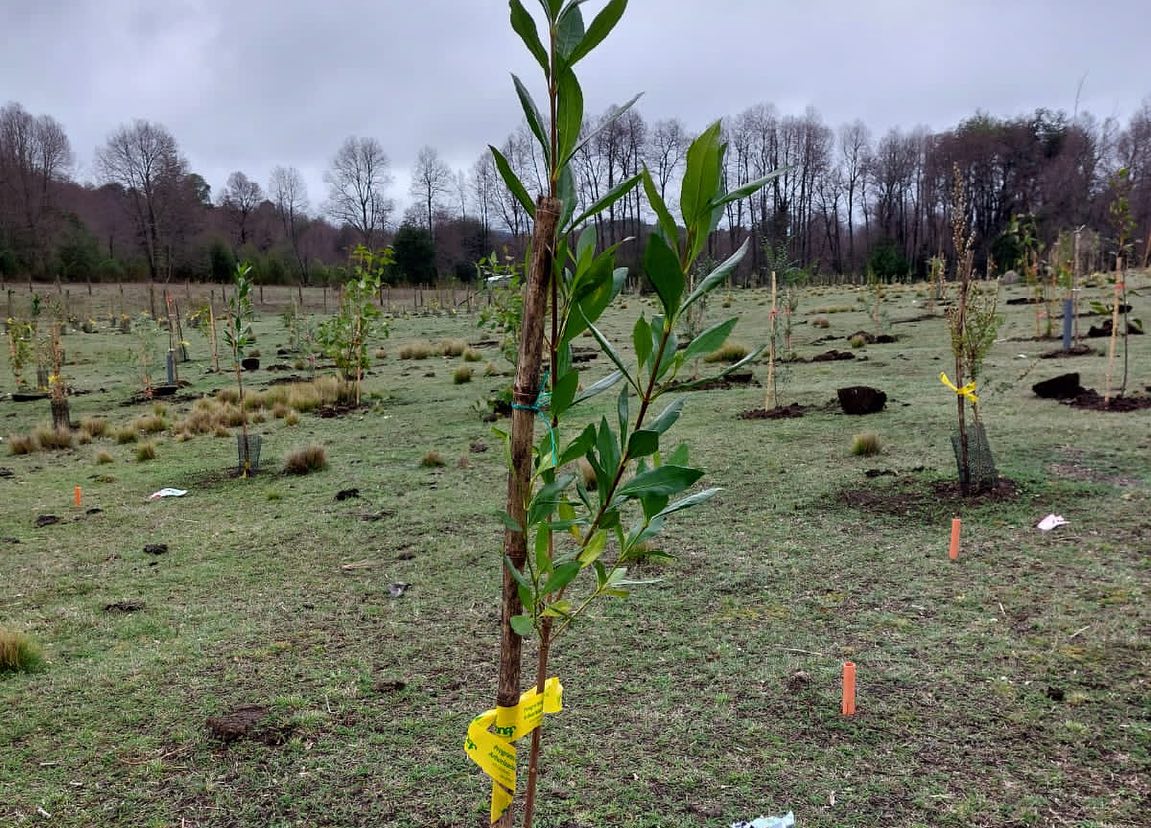
One of the threats to the new trees comes from the high population of wild rabbits, which can gnaw on the stems and roots of the newly planted specimens. To mitigate this risk and maintain balance with native fauna, each tree is protected with a barrier designed not to affect the trees or the animals themselves, thus allowing harmonious and sustainable coexistence between the natural ecosystem and the project’s development.

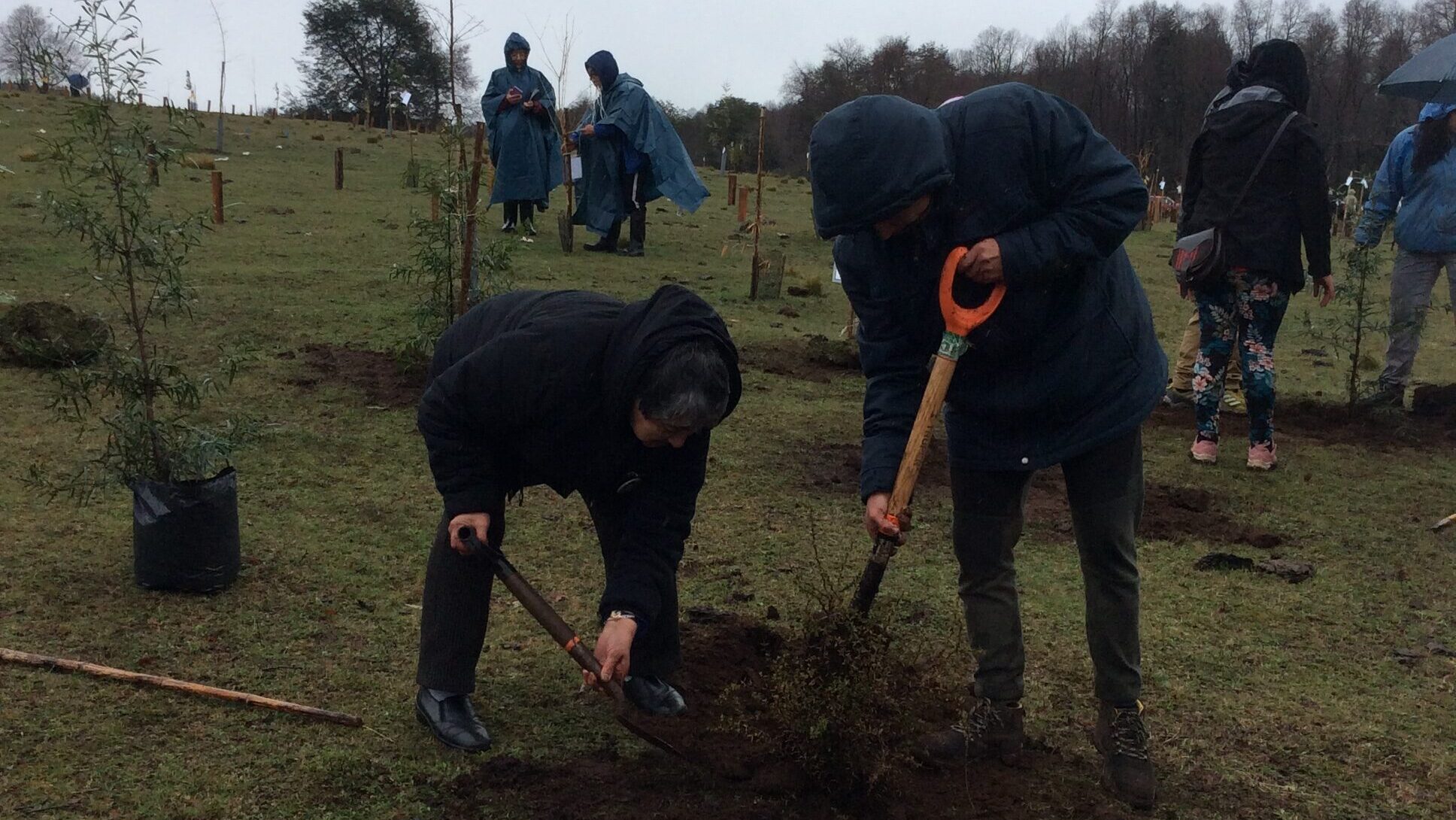
Start of the planting period: On May 9, 2023, the planting of native trees began. Thanks to the support of national and foreign volunteers, as well as social and union organizations, 400 trees were planted, including raulí, coigüe, oak, maitén, arrayán, notro, radal, and lumilla, in a gesture of deep connection between memory, land, and hope. Each of these trees is being georeferenced and bears the name of the victim it represents.

Inauguration of the Memory Forest: On September 9, 2023, commemorating the 50th anniversary of the civic-military coup in Chile, the inauguration ceremony of the Ecomemoria Forest was held, with the participation of relatives of victims from different parts of the country and abroad, representatives of Associations of Relatives of the Disappeared Detainees and Politically Executed, social and union organizations (ANEF, CUT), international delegations, Mapuche communities, and representatives of local and regional government.

2024 – Planting, Irrigation, and Community Consolidation

The year 2024 was marked by the consolidation of ecological and community work.

Water infrastructure: The construction of a 39-meter-deep well was completed, providing sufficient water for forest irrigation, a fundamental step to ensure the survival of trees during summer periods. Alongside the well, two water tanks were installed to serve as supply points for irrigation and forest care.

Summer irrigation campaign (January–April 2024): Two organizations participated: Modatima Wallmapu and the Mapuche Community Liempi Colipi, along with more than 30 volunteers from different regions of Chile and countries such as Sweden, Germany, Belgium, Norway, England, and Scotland. Each tree received an average of 5 litres of water every two days, representing more than 25,000 litres used throughout the irrigation season.

Winter maintenance: During the winter, reinforcement of stakes and protective fences was carried out, as well as structural inspection of the trees to prevent damage from wind or snow.

New plantation: In parallel, a second plantation of about 400 native trees was carried out, continuing with the forest expansion plan. Our final goal is the planting of 3,300 native trees, one tree for each victim of enforced disappearance and political execution during the dictatorship

Complementary infrastructure: A protective terrace and two ecological bathrooms were built to facilitate work and volunteer days. This infrastructure also serves as a meeting, conversation, and educational space for volunteers and visitors who continuously arrive at Ecomemoria.


Results of the year: Thanks to moderate weather conditions and the care provided, tree losses were below 5%, a figure considered low compared to the mortality range of recent native plantations, estimated between 20% and 40% by forestry specialists from the National Forestry Corporation (CONAF).

2025 – Climate Challenges and New Plantations

The year 2025 presented especially adverse climatic conditions, which endangered many of the trees.

Irrigation and maintenance campaign: During the summer, a new irrigation campaign was carried out with the participation of members of Modatima Wallmapu, CONAF, and 15 volunteers. Stakes were reinforced, protection systems were maintained, and daily irrigation was used to reduce the impact of an extremely hot and dry summer, one of the most intense in recent years in the area.

Climate impact: High temperatures caused an approximate loss of 35% of the planted trees, mainly in the most exposed areas. This scenario reinforces the need to continue improving water collection systems and to establish soil conservation works (OCAS) and living fences, as proposed in the 2025 Forestry Technical Report prepared by volunteer technicians.

Autumn reforestation: In response to the losses, during autumn 2025 a new reforestation day was carried out with 1,500 replants, strengthening the forest’s vegetation cover.

Establishment of a nonprofit organization: Ecomemoria was established as a Foundation, thus obtaining legal personality. This will allow collaborations with other organizations both in Chile and abroad, as well as projecting in the future an open space for the community for education in ecology and memory. At the time of preparing this newsletter, Ecomemoria has an incipient forest, with native trees belonging to 21 different species, carefully selected to reflect the biodiversity of the territory and strengthen the forest’s ecological balance.

======================================

Financial Summary

May 2023 – October 2025


This financial report summarizes the main sources of funding and the use of resources corresponding to the period May 2023 – October 2025 of the Ecomemoria Project.

Sources of funding: During this period, most of the financial resources came from donations by individuals residing in Chile, the United Kingdom, and other European countries.

There was also support from social and union organizations (ANEF, CUT) and from CONAF, which in 2023, at the start of the project, donated trees in the name of victims belonging to their organizations.


These donations were made directly through fundraising activities, individual transfers, and support campaigns promoted by related organizations and individuals committed to the cause of human rights, truth, and justice.

The contributions received during the 2023–2025 period have been essential in consolidating Ecomemoria as a living space of memory and restoration and protection of the native forest and ecosystem, and as a reference in the articulation between historical memory, ecological justice, and human rights.


Use of funds: The resources received have been mainly allocated to the following areas: Basic infrastructure – Planting and care of native species – Ecological maintenance and monitoring.

Community and educational activities: organization of volunteer days, guided visits, and activities with local communities, families of victims, and NGOs.

Logistical costs: for carrying out various tasks (fuel, purchase of materials, food for volunteer days, among others)

Undoubtedly, the financial costs of this project would be much higher if it were not for the permanent volunteer work of those who are part of the project, and those who have collaborated in irrigation, planting, and technical support activities.

Total Raised: $43,975,120 CLP

Total Expenses: $43,820,829 CLP

Balance: $154,291 CLP

Having obtained legal personality in Chile has allowed us to open an institutional bank account, offering greater transparency, trust, and formality for individuals and organisations wishing to support the project financially. As you can see, the needs of the Forest go beyond what can be sustained solely through volunteer work.

If you wish to continue supporting us or make new donations, these can be made directly to our institutional account:

Bank Details (CHILE)

Account Name: Fundación Ecomemoria

RUT: 65250519-8

Bank: Banco Estado

Checking Account Number: 63270332376

SWIFT CODE: BECHCLRM

The project reaffirms its commitment to transparency in resource management, accountability to its collaborators, and the strengthening of its mission: “Sowing Memory, Fighting for Truth and Justice”

======================================

LOOKING AHEAD


The journey of Ecomemoria continues.

The collective effort of hundreds of people, in Chile and abroad, has made it possible to transform a bare piece of land into a living space of memory, dignity, and native forest.

The challenge for the coming years will be to ensure the ecological and community sustainability of the project, expanding support networks, strengthening local alliances, and continuing the work of environmental education and historical memory.


Ecomemoria deeply thanks all the individuals, families, and organizations who, with their time, work, and/or donations, have made it possible to keep this seed of life, justice, and memory alive.

Boletín Informativo N 1

Mayo 2023 – Octubre 2025


El presente Boletín de Ecomemoria entrega un resumen de las actividades desarrolladas entre Mayo de 2023 y Septiembre de 2025. Tiene por objeto informar a quienes apoyan Ecomemoria, así como a otras personas u organizaciones interesadas, respecto a los avances, logros alcanzados y desafíos que se enfrentan en relación con el proceso de establecimiento, desarrollo y mantención del Bosque Ecomemoria, ubicado en Curacautín, Región de la Araucanía, Chile.

Este boletín tiene el propósito de  transparentar el avance del proyecto y fortalecer los lazos con quienes hacen posible su desarrollo. A partir de 2026, este boletín se publicará de forma semestral, complementando la información disponible en la página web oficial (ecomemoria.cl) y las redes sociales de Ecomemoria (Facebook e Instagram), con el propósito de mantener una comunicación fluida y permanente con la comunidad, voluntariado y red internacional de apoyo.

2023 – Fundación y Primera Plantación

Durante el año 2023 se sentaron las bases materiales y simbólicas del proyecto Ecomemoria. Infraestructura inicial: Se construyó el cerco perimetral y el portón de acceso principal, una obra esencial para proteger el terreno del ingreso de animales, particularmente vacas, bueyes y caballos, que podrían dañar los árboles recién plantados. El área donde se encuentra Ecomemoria alberga una gran diversidad de fauna local, incluyendo aves, pequeños mamíferos e insectos polinizadores. Mas de un tercio del área comprende un corredor biológico de alta importancia para el ecosistema.

Una de las amenazas para los árboles nuevos proviene de la alta población de conejos silvestres, que pueden roer los tallos y raíces de los ejemplares recién plantados. Para mitigar este riesgo y mantener el equilibrio con la fauna nativa, cada árbol se protege con una barrera, diseñada para no afectar a los árboles ni a los propios animales, permitiendo así una convivencia armónica y sostenible entre el ecosistema natural y el desarrollo del proyecto.

Inicio del período de plantación: El 9 de Mayo de 2023 se dio inicio a la plantación de los árboles nativos. Gracias al apoyo de voluntarios, nacionales y extranjeros, así como de organizaciones sociales y sindicales, se plantaron 400 árboles, entre ellos: raulíes, coigües, robles, maitenes, arrayanes, notros, radales y lumillas, en un gesto de profunda conexión entre la memoria, la tierra y la esperanza. Cada uno de estos árboles esta siendo georeferenciado y cuenta con el nombre de la víctima que representa.

Inauguración del Bosque de la Memoria: El 9 de Septiembre de 2023, en conmemoración de los 50 años del golpe cívico-militar en Chile, se realizó la ceremonia de inauguración del Bosque Ecomemoria, contando con la participación de familiares de víctimas de distintos lugares del país y del extranjero, representantes de Agrupaciones de Familiares de Detenidos Desaparecidos y Ejecutados Políticos, organizaciones sociales, gremiales (ANEF, CUT), delegaciones internacionales, comunidades mapuche y representantes del gobierno local y regional.

2024 – Plantación, Riego y Consolidación Comunitaria

El año 2024 estuvo marcado por la consolidación de las labores ecológicas y comunitarias.

Infraestructura hídrica: Se concretó la construcción del pozo profundo de 39 metros, que suministra el agua suficiente para el riego del bosque, un paso fundamental para garantizar la supervivencia de los árboles durante los periodos de verano. Junto al pozo se instalaron dos estanques de agua que sirven como punto de abastecimiento para el riego y cuidado del bosque.

Campaña de riego de verano (Enero–Abril 2024): Participaron dos organizaciones: Modatima Wallmapu, y la Comunidad Mapuche Liempi Colipi, y más de 30 voluntarias y voluntarios provenientes de distintas regiones de Chile y de países como Suecia, Alemania, Bélgica, Noruega, Inglaterra y Escocia. Cada árbol recibió un promedio de 5 litros de agua cada dos días, lo que representa más de 25.000 litros utilizados durante toda la temporada de riego.

Mantenimiento invernal: Durante el invierno se realizó el refuerzo de tutores y cercos protectores, además de la revisión estructural de los árboles para prevenir daños por viento o nieve.

Nueva plantación: En paralelo, se ejecutó una segunda plantación de cerca de 400 árboles nativos, continuando con el plan de expansión del bosque. Nuestro objetivo final es la plantación de 3.300 árboles nativos, un árbol por cada víctima detenida desaparecida y ejecutada política de la dictadura

Infraestructura complementaria: Se construyó una terraza de resguardo y dos baños ecológicos para facilitar las jornadas de trabajo y voluntariado. Esta infraestructura también sirve como punto de reunión, conversación y educación para voluntarios y visitas que continuamente llegan a Ecomemoria.


Resultados del año: Gracias a las condiciones climáticas moderadas y los cuidados desplegados, las pérdidas de árboles fueron inferiores al 5%, cifra considerada baja en comparación con el rango de mortalidad de plantaciones nativas recientes, estimados entre 20% y 40% por especialistas forestales de la Corporación Forestal Nacional (CONAF).

2025 – Desafíos Climáticos y Nuevas Plantaciones

El año 2025 presentó condiciones climáticas especialmente adversas, que pusieron en peligro a muchos de los árboles.

Campaña de riego y mantenimiento: Durante el verano, se efectuó una nueva campaña de riego con la participación de miembros de: Modatima Wallmapu, CONAF, y 15 voluntarias y voluntarios. Se reforzaron los tutores, se mantuvieron los sistemas de protección y se trató de reducir, con el riego diario, el impacto de un verano extremadamente caluroso y seco, uno de los más intensos de los últimos años en la zona.

Impacto climático: Las altas temperaturas provocaron una pérdida aproximada del 35% de los árboles plantados, principalmente en las zonas más expuestas. Este escenario refuerza la necesidad de continuar  mejorando los sistemas de captación de agua y de establecer obras de conservación de suelo (OCAS) y cercos vivos, tal como se propone en el Informe Técnico Forestal 2025, realizado por técnicos voluntarios.

Reforestación de otoño: En respuesta a las pérdidas, durante el otoño de 2025 se ejecutó una nueva jornada de reforestación con 1.500 repiques, fortaleciendo la cobertura vegetal del bosque.

Constitución de organización sin fines de lucro: Ecomemoria se constituyó como Fundación teniendo así personalidad jurídica. Esto permitirá establecer colaboraciones con otras organizaciones tanto en Chile como en el extranjero, así como también, proyectar a futuro un espacio abierto a la comunidad para la educación en ecología y memoria.  Al momento de la preparación de este boletín, Ecomemoria cuenta con un bosque incipiente, con   árboles nativos pertenecientes a 21 especies distintas, cuidadosamente seleccionadas para reflejar la biodiversidad propia del territorio y fortalecer el equilibrio ecológico del bosque.

======================================

Resumen de Finanzas


Mayo 2023- Octubre 2025


El presente informe financiero resume las principales fuentes de financiamiento y el uso de los recursos correspondientes al período Mayo 2023 – Octubre 2025 del Proyecto Ecomemoria.

Fuentes de financiamiento: Durante este período, la mayor parte de los fondos económicos provino de donaciones de personas particulares residentes en Chile, el Reino Unido y otros países de Europa.

También se contó con el apoyo de organizaciones sociales, gremiales (ANEF, CUT) y de CONAF que el año 2023, en el contexto de inicio del proyecto, realizaron donaciones de árboles en nombre de víctimas pertenecientes a sus organizaciones.


Estas donaciones se realizaron de manera directa a través de actividades de recaudación, transferencias individuales y campañas de apoyo impulsadas por organizaciones afines y personas comprometidas con la causa de los derechos humanos, la verdad y la justicia.

Las contribuciones recibidas durante el periodo 2023–2025 han sido esenciales para el proceso de ir consolidando a Ecomemoria como un espacio vivo de memoria y restauración y protección del bosque  nativo y el ecosistema, y un referente en la articulación entre memoria histórica, justicia ecológica y derechos humanos.


Destino los fondos: Los recursos recibidos se han destinado principalmente a las siguientes áreas: Infraestructura básica – Plantación y cuidado de especies nativas – Mantenimiento y monitoreo ecológico.

Actividades comunitarias y educativas: organización de jornadas de voluntariado, visitas guiadas y actividades con comunidades locales, familias de víctimas y ONGS.

Costos logísticos de ejecución de los diversos trabajos (bencina, compra de materiales, alimentación para las jornadas de voluntariado, entre otros)

Sin dudas, los costos económicos de este proyecto serían mucho mayores, sino fuera por el trabajo voluntario permanente de quienes forman parte del proyecto, y de quienes han colaborado en las jornadas de riego, plantación y apoyo técnico.

Total Recaudado: $43,975,120 CLP

Total Gastos: $43,820,829 CLP

Balance $154,291 CLP

El contar hoy con Personalidad Jurídica en Chile nos permitió abrir una cuenta institucional, lo que ofrece mayor transparencia, confianza y formalidad a todas las personas u organizaciones que deseen apoyar económicamente el proyecto. Como podrán ver, las necesidades del Bosque superan lo que podemos cubrir únicamente mediante el trabajo voluntario.

Si desean seguir apoyándonos o realizar nuevas donaciones, estas pueden hacerse directamente a nuestra cuenta institucional:

Datos Bancarios (CHILE)

Nombre de la cuenta: Fundación Ecomemoria

RUT: 65250519-8

Banco: Banco Estado

Cuenta: Vista

Número de cuenta: 63270332376

SWIFT CODE: BECHCLRM

El proyecto reafirma su compromiso con la transparencia en la gestión de recursos, la rendición de cuentas ante sus colaboradores y el fortalecimiento de su misión:“Sembrando la Memoria, Luchando por Verdad y Justicia”

======================================

MIRANDO HACIA EL FUTURO

El camino de Ecomemoria continúa.

El esfuerzo colectivo de cientos de personas, en Chile y el extranjero, ha permitido transformar un terreno desnudo en un espacio vivo de memoria, dignidad y bosque nativo.

El desafío para los próximos años será asegurar la sostenibilidad ecológica y comunitaria del proyecto, ampliando las redes de apoyo, fortaleciendo las alianzas locales y continuando el trabajo de educación ambiental y memoria histórica.


Ecomemoria agradece profundamente a todas las personas, familias y organizaciones que, con su tiempo, trabajo y/o donaciones, han hecho posible mantener encendida esta semilla de vida, justicia y memoria.